Skip to content

2BFT Director · a Claude Code skill · 11 Nov 2026

One director above every video tool on one PC.

Give it an idea, a voice note, a script or a song. It writes the plan first, picks code or AI for each shot, times the picture to the voice, sends the film to a critic, measures it, and only then calls it done.

SCENE 01 / 13RECALL01020304050607080910111213

Recall. Before a single question, it reads what was decided before: the brand, the series, the person. A series has its own laws, and those beat every general rule.

1 / 13

Give it an idea

Four ideas, four different films.

The director asks the same four questions of every idea, then picks the lane and the style. These are the answers it gives, taken from its own rules.

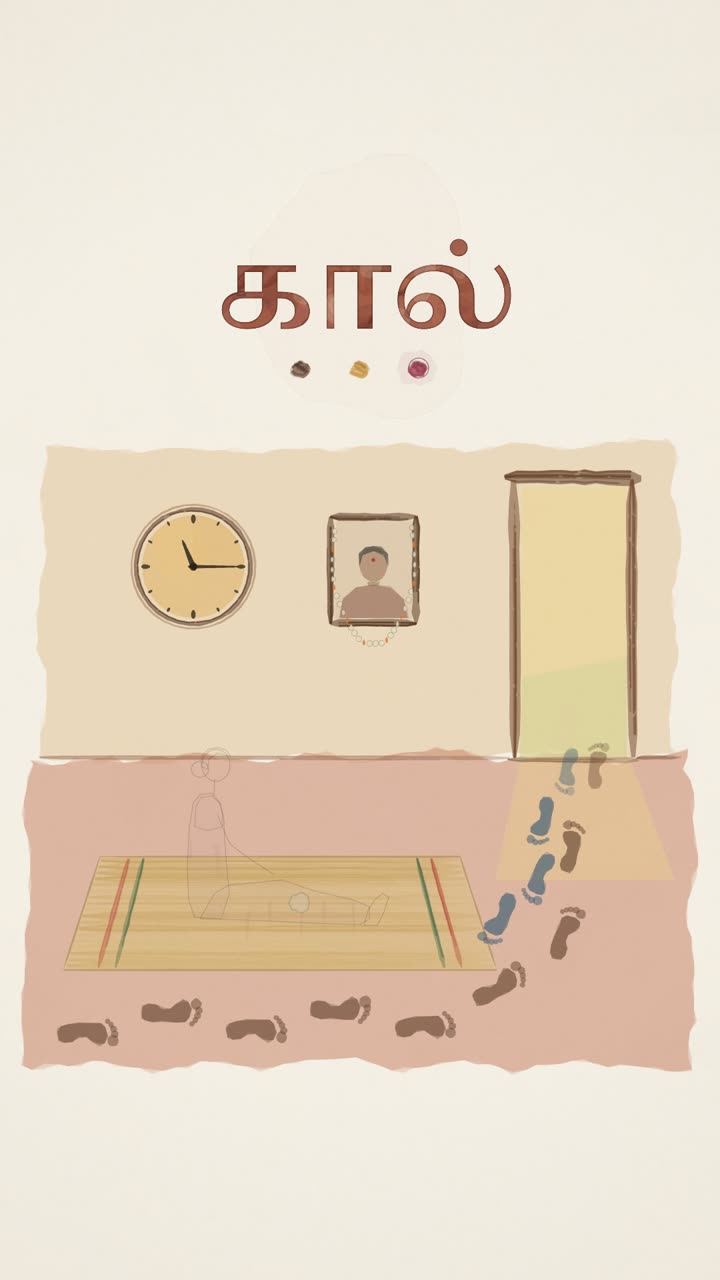
Sujal recorded a 35-second Tamil take on one word with two meanings. Make it a reel.

  1. Is someone on camera?No
  2. Is exact timing to a voice, lyric or beat the point, or are there words on screen?Yes: his voice and the words on screen are the point
  3. Do characters need to talk with moving mouths?No
  4. Is the shot about real-world motion: steam, cloth, crowds, rain, food, a face reacting?No
Lane
A, code film. Code hits a word to the frame; a video model cannot.
Style
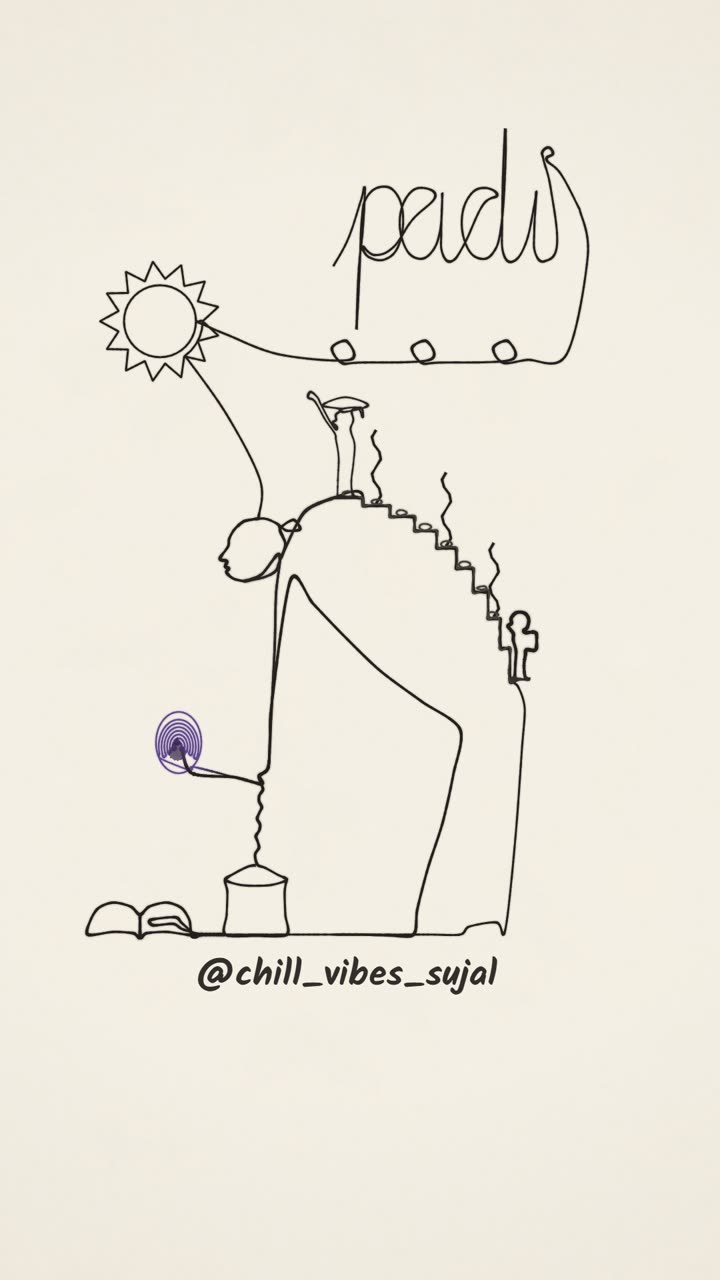
Poem, confession, memory: watercolour, ink wash, urban sketch or one-line drawing.
Cost
No AI images; one look proof, then a 10 to 40 minute build.
Before it builds
His recording leads: the picture and the music follow his timing, and the Tamil is read back before the edit.

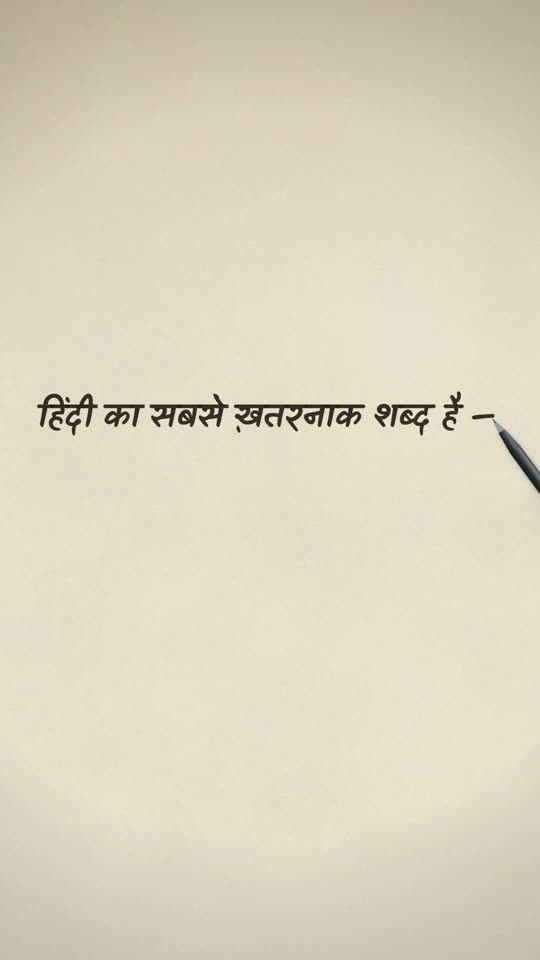
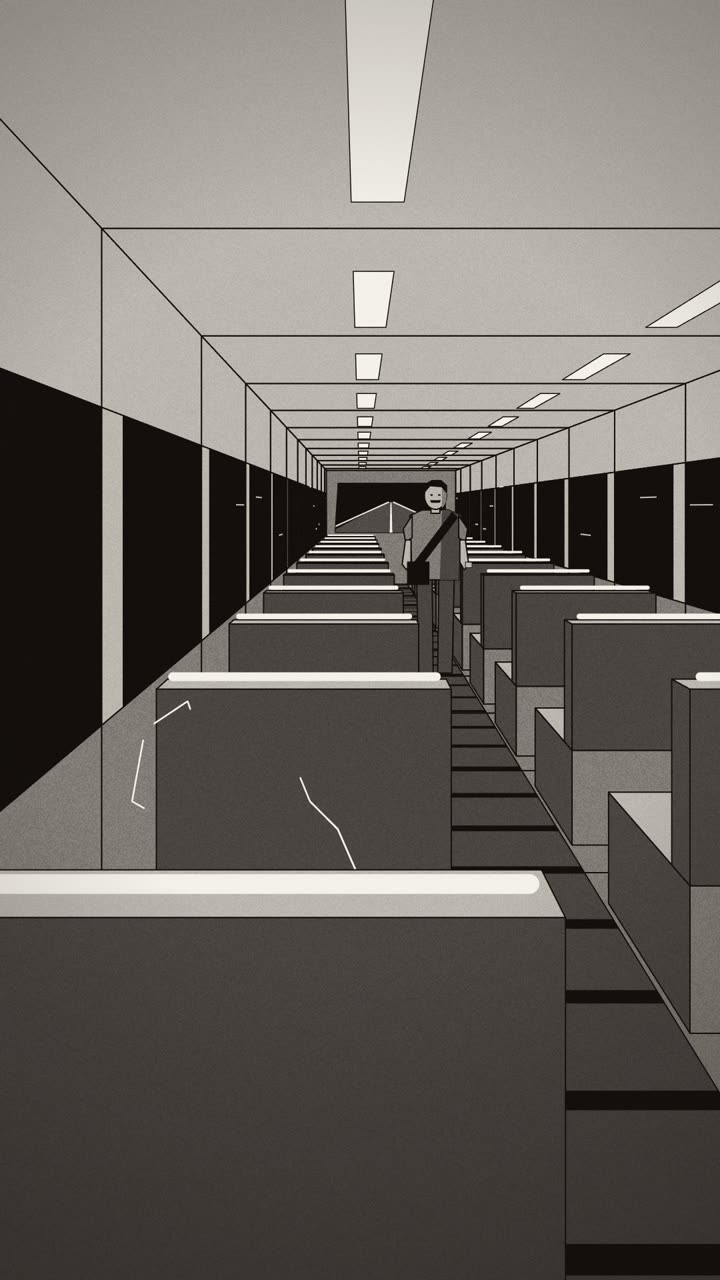
Made this way: The one-word films, 31 Oct to 3 Nov 2026, in watercolour and one-line drawing

The loop

Thirteen steps, five gates.

Why a loop and not a template: the best films here came from a plan written before any pixel, one proven frame before a batch, the voice timed before the picture, and a second pair of eyes before delivery. The ones that were rejected had skipped one of those. Each gate exists because skipping it once cost a rebuild.

  1. Recall

    Before a single question, it reads what was decided before: the brand, the series, the person. A series has its own laws, and those beat every general rule.

    We have made dozens of films on this PC; nobody should have to explain a decision twice.

  2. Brief

    Five lines: platform and length, what the viewer should feel, who speaks in which language, what must and must not be shown, and whether it is our page, a client ad or a boosted post.

    The last line decides the music and the licence. Missing facts are asked once, never invented.

  3. Benchmark

    One reference before inventing anything: a reel, a creator or the closest film we already finished.

    Take the grammar only, never a creator’s characters, lettering or music.

  4. Lane + style

    One lane for the film, a different lane only for a few hero shots, and a style chosen by what the material feels like.

    Pick by what the material is, not by which tool is newest.

  5. TreatmentGATE

    A written plan: a one-line logline, the hook in the first 1.5 seconds, the turn, the shot list with sizes and camera moves, the sound plan and the budget.

    No pixels before the plan exists.

  6. Look proofGATE

    One style frame, one sprite test or one pilot shot, looked at full size before anything else is made.

    A wrong first frame poisons every later one.

  7. Voice = clockGATE

    The voice is recorded or made first, every line is read back by speech recognition, and the word times become the shot times.

    When the person recorded it themselves, their performance leads and the picture follows.

  8. Picture

    The lane’s own skill builds it. Independent parts go to parallel builder agents; GPU jobs run one at a time.

    A contact sheet at the cuts after every pass, at full size.

  9. Edit

    Pace and comedy timing by numbers: reading time, shot-length bands, one acceleration, one breath, the punch on a face.

    Fast because nothing is wasted, never because the viewer could not finish reading.

  10. Sound

    Every visible action gets a sound in the style’s material; ambience, foley and music; music ducks under the voice and stops for the punch; two real silences; -14 LUFS.

    Sound is half the film and the cheapest way to make a picture feel expensive.

  11. Critic loopGATE

    A fresh agent gets the film, a contact sheet and the plan, and names the five weakest moments with timestamps. A second opinion can come from Gemini, which watches the file.

    Fresh eyes find what the builder cannot. A static picture with moving text is not done.

  12. QCGATE

    A script measures duration, streams, loudness, silent stretches, black or frozen frames, and draws the Reels safe zones on a cut sheet.

    Nothing is called done before these numbers are in.

  13. Deliver

    The master, a clean copy when the song is added in the app, a phone copy, the credits with every licence line, and a note of what is a placeholder and what only a human ear can judge.
    Nothing is published or uploaded without a yes.

Six lanes

Where each picture comes from, and what it costs.

One lane carries the film. The premium move is a hybrid: keep a code film as the spine and buy two to four hero shots from another lane, an establishing shot, the turn, the button, then hold them together so the seams do not show.

ACode film

Picture comes from
A Lemo-Opuscar style, drawn and animated in code
Wins when
Voice-led reels, poems, lyric videos, explainers, ads; exact timing; words on screen
Cost
No AI images. A 10 to 40 minute build.
Watch out
Organic motion and faces are hard; a lazy build becomes a still picture with moving text.

BCode art and motion

Picture comes from
Code-painted clay worlds, moving paintings, browser motion, Remotion, code anime
Wins when
Podcasts, painted worlds, product promos, kinetic type
Cost
No AI images. About 45 s per painted picture on the CPU.
Watch out
No faces from photos.

CImage to code animation

Picture comes from
Codex image sheets cut into sprites, lip-sync, and a 2.5D camera on a still
Wins when
Talking characters with a rich 3D look; moving a still without a video model
Cost
Codex images from a shared daily budget. The 2.5D camera makes 4 s in about 20 s on the CPU.
Watch out
Images are counted; one pilot image before any batch.

DImage to offline AI video

Picture comes from
Codex frames animated by WAN 2.2 or LTX-2.5 on the local GPU
Wins when
Acting, weather, crowds, food, fabric, real-camera feel, shots with their own sound
Cost
Codex images plus 1 to 4 GPU minutes a shot (LTX-2.5 about 1 minute per 5 s, with sound; WAN 2.2 14B 2 to 4 minutes per 3 to 5 s).
Watch out
3 to 5 s a shot, one action and one camera move, no lip-sync, text in the frame warps.

EFootage

Picture comes from
A real recording: face-tracked reframe, tightening, captions, SFX, music
Wins when
Someone on camera; stand-up, streams, shop takes
Cost
No images.
Watch out
Stand-up cuts back to the real footage after the punch and stays through the whole laugh.

F3D

Picture comes from
Blender, Unreal Engine or three.js
Wins when
A true camera through a set, product turntables, body motion from a webcam
Cost
Long builds.
Watch out
Only when the Blender or Unreal connection is up; otherwise it says so and offers lanes A to C.

Mixing lanes without the seams showing

  1. One palette: five colours from the main style, every bought shot graded toward them.
  2. One texture: the same grain, paper or halftone over every shot, added last.
  3. One type system: all words drawn in code on top; image and video models are asked for no text.
  4. One frame rate for the whole film.
  5. Change lane on an action or a sound, never on a rest.
  6. One sound world running unbroken through every shot.

Timing by numbers

You cannot feel a beat. You can measure one.

The first three seconds

Frame one already has the subject large and moving: no logo, no fade from black. By 0.5 s the first word; by 1.5 s the viewer knows what this is about; by 3 s the first change of shot.

Reading time

Two to five words a caption, on screen as long as they are spoken plus 0.3 s. A number needs 1.2 s alone. Fast is made with fewer words per screen, not by cutting before people finish reading.

The comedy clock

Setup, clear and wide. A pause of 6 to 12 frames with the music out. The punch on a face, seen whole. The reaction, held a little longer than is comfortable. Then the button, and the film ends on its biggest laugh.

Proof

The films it was written from.

The skill is new: it was written on 11 November 2026, from the way these films were made on the same PC between 28 October and 6 November. Each one had a plan before the first frame and was timed to the voice.

One still, moved by code

This is lane C’s 2.5D camera from the skill’s own demo: one image of our two cartoon characters, cut into layers and moved with depth, drift and grain. No video model touched it, so every pixel stays on-model. On the CPU it makes a 4-second shot in about 20 seconds.

What it cannot do

Said out loud.

  • It directs; it does not build alone. Each lane’s own skill makes the pictures, and a person approves the look and the final cut.
  • The offline video lanes need Windows and an NVIDIA GPU. It was built on an RTX 5070 Ti with 16 GB and 32 GB of RAM, and runs one GPU job at a time.
  • Codex images come from a ChatGPT plan with a daily limit shared by every session: one image per request, one pilot before any batch.
  • Video-model shots are 3 to 5 seconds each, one action and one camera move, with no lip-sync, and words inside the frame warp. That is why all words are drawn in code on top.
  • 3D only when the Blender or Unreal connection is up. When it is down, it says so and offers another lane.
  • It cannot hear a laugh. It marks the setup, punch and reaction times so a human ear can judge them.
  • Only our own voice is cloned. It does not invent facts, prices, quotes or testimonials.

Tools it directs

Not ours, credited.

The director is ours. These are the tools and models it hands work to, each made by its own team.

Lemo-Opuscar
the film-style library by lemomo-ai, 66 styles drawn in code
Codex
OpenAI’s image model, through a ChatGPT plan with a daily limit
WAN 2.2 and LTX-2.5
open video models, run offline on the local GPU through ComfyUI
IndicF5 and Chatterbox
his own cloned voice in Tamil, Hindi and English; only his voice is cloned
Sarvam, Svara and HeyGen
stock voices
Whisper and IndicConformer
reading every line back
Gemini
a second critic that can watch the film
Blender, Unreal Engine, three.js, Remotion, GSAP
3D and motion when a lane needs them

Questions

Short answers.

Does it make a film by itself?

No. It directs. It writes the plan, picks the lane for each shot, times the voice, runs a critic and the checks, and hands the building to the skill that owns each lane. A person approves the look and the final cut, and nothing is published without a yes.

Is it an AI image or video generator?

No. Most films it directs are drawn in code with no image model at all. AI images and offline video models are used for a few hero shots when a shot needs real-world motion, and brand clients are asked first.

What does it need to run?

Claude Code on Windows. The code lanes run on the CPU; the offline video lanes need an NVIDIA GPU (it was built on an RTX 5070 Ti with 16 GB, and 32 GB of RAM). Codex images come from a ChatGPT plan with a daily limit shared by every session.

Can I download it?

Not yet. The 2BFT Director was written on 11 November 2026 from the films on this page and runs on our own PC with our own tools. The 2BFT course teaches the method behind it.

Which languages?

Tamil, Hindi and English. Tamil is written in Tamil script and Hindi in Devanagari for the voice engines, and every line is read back by speech recognition before the picture is timed to it.

Learn the method.

The 2BFT course teaches the way these films are made: the plan first, the voice as the clock, code for every word on screen, and the critic before you post.