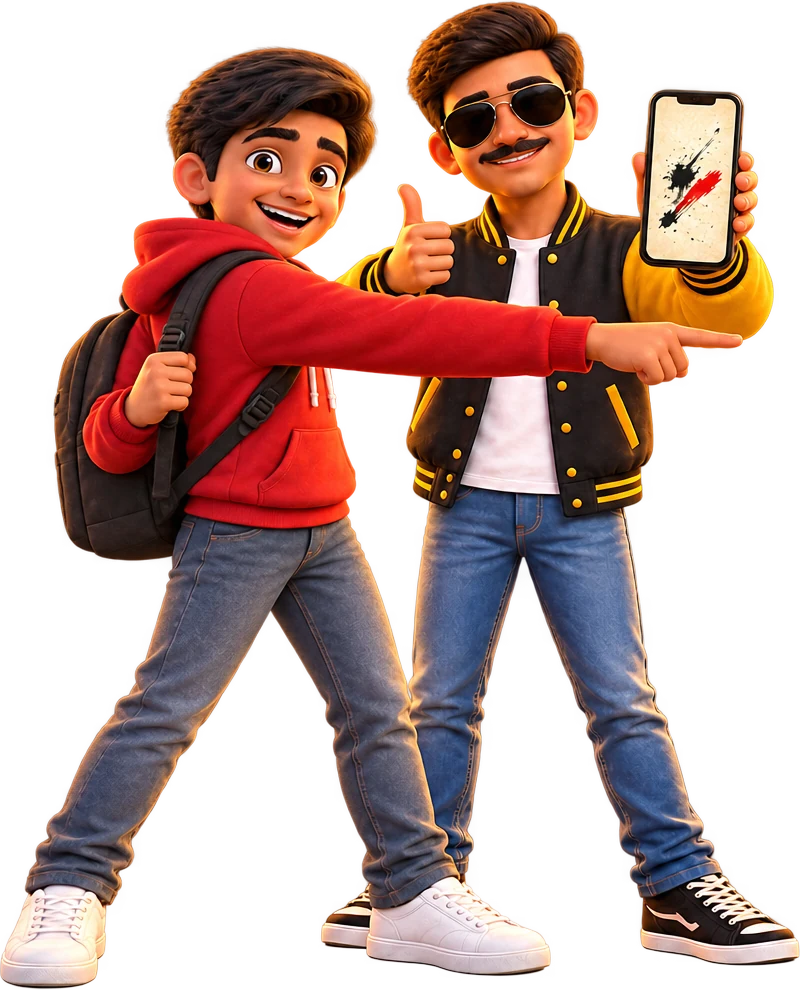
The films in this post
In short. NETA is a 43-second Hindi AI movie trailer in which Navaratan wins an election. It is fiction: the town, the rival and the party symbol are all invented, and the only real face is Navaratan's own. We made it on one PC with LTX-2.5, cut every shot to the hits of the music, and learned three lessons about beat-cutting that we now use on every film.
Is NETA real?
No. The film above is labelled "A work of fiction", and it is. Navaratan wins an election in an invented town, Nayapur, against an invented rival, Bhairav Pratap. The party symbol, कैमरा छाप (the camera), is invented too. A counting board ticks up and he wins. The only likeness in the film is Nav's, from his own photo.
What was the idea and what rules did we set?
We wanted to know if one PC could make a trailer that feels like a real film. The rules:
- Fiction only, and labelled so on screen.
- One likeness: Nav's own photo as the single reference.
- 43 seconds, 1080x1920, mixed to -14.0 LUFS.
- Every cut lands on a hit in the music.
We borrowed the directing grammar of an open-source cinema-director skill (MIT licence) for shot sizes and cutting. It is the same director's loop we describe in our LTX-2.5 pillar post.
How do you plan a beat-cut trailer?
Pick the music first and cut the picture to it. We wrote a shot plan with a length for every shot, so each cut falls on a hit in the music track. Because the voices and music set the clock, the picture follows them. A beat-cut trailer works only if the hits are in the right place, and that turned out to be the hardest part.
How did we make the stills and shots?
Ten Codex stills, with Nav's own photo as the only likeness reference, became the panels. LTX-2.5 turned them into shots:
- Image-to-video for most shots.
- Text-to-video for the crowd seen from behind, because no face is needed there.
- A garland thrown onto him, generated from an existing frame.
- Slow motion and hold locks, which stop the camera wandering.
- A 2x upscale at the end.
Over-generating mattered here too. We rendered more than we needed and trimmed each shot before the point where the AI starts to drift. A shot that is cut early never shows its drift.
Who speaks, and what is the music?
Voices come from HeyGen: a narrator, one voice for Nav and one for the rival. The music is a HeyGen music track.
How did we make the Devanagari cards?
The cards and the counter were drawn in headless Chrome. The Python image library on our PC could not shape Devanagari correctly, so the conjuncts came out wrong. A browser shapes Hindi properly, so we render the text there and use the result in the edit. As in all our films, no text comes from the video model.
What were the three lessons?
1. Detect the music's hits on the file, not by ear. We first marked a "hit" at 17.02 s. It was the quietest moment. The real hit was at 18.44 s. Now we measure hits on the audio itself.
2. Count frames cumulatively. Cutting segments by seconds drifted the picture by 3 to 4 frames against the music. We now add frame counts up from the start, so the error cannot grow.
3. Offline substitutes can be as good. On 14 November we hit the image limit at 75 images in one usage window on the Plus plan, and the reset came later than we had estimated. We filled the gaps with text-to-video shots, which were as good as the planned frames.
Our shots are about 5 seconds long when rendered, so every one is trimmed to its slot. The slot lengths come from the music, not from the render.
What would we change?
- Plan for the image limit. Draw the stills early and keep spares, so a limit never stops a cut.
- Check the music hits before cutting anything, not after.
- Pick the voices before the shot plan is final, so lines are not squeezed into shots.
The film is too new for view numbers. We will add them if they exist. For the wider week, see what we made from 12 to 19 November, and for the PC and the method see AI films on your own PC.
Learn it
The 2BFT Lab teaches this: ₹10,000 once for the live course (live every Wednesday and Sunday, 7 PM IST, with every recording) or ₹1,000 for the recordings alone. The AI films session is on 7 December. You need your own Claude plan, about ₹1,800 a month for Pro, paid to Anthropic. See the Lab and prices.